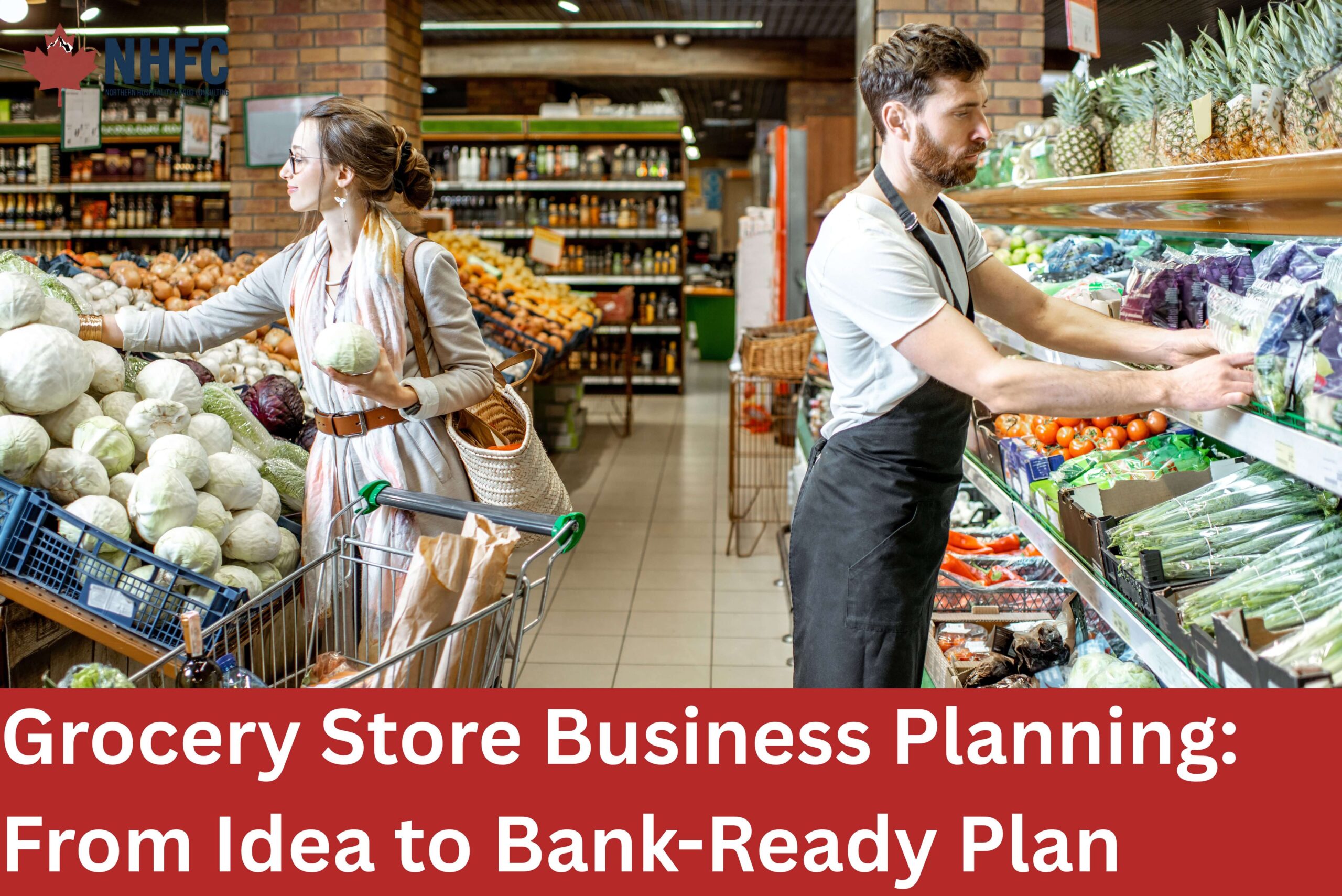
Grocery Store Business Planning: From Idea to Bank-Ready Plan
NHFC — From Idea to Opening Day (and Beyond)
Launching a grocery store in Canada requires more than passion for food and community. To secure financing, leases, and supplier terms, you need a business plan that shows you’re serious — not guessing.
In this article, we break down the essential elements of a bank-ready grocery business plan, along with guidance from NHFC, the consulting partner that helps Canadian grocers go from concept to grand opening.
1) Define Your Concept and Target Market
Before numbers come into play, decision-makers want to see clarity:
- What type of store will this be? (Ethnic grocery, discount, premium, organic, convenience, hybrid)
- Who are your customers? (Families, students, seniors, cultural communities)
- Why will they choose you over competitors?
A clear niche reduces risk — and increases your chance of financing approval.
NHFC Guidance:
We help solidify your concept with real market insights — not assumptions — so lenders see demand, not guesswork.
2) Location Screening and Competitive Analysis
Lenders want proof you understand your environment:
- Population density and demographics within 5–10 minutes
- Existing competitors: pricing, product mix, store conditions
- Customer convenience: transit, parking, walkability
- Growth opportunity in the surrounding area
A strong plan includes a simple map and competitor snapshot.
NHFC Support:
We evaluate potential sites early to ensure suitability for food retail operations and equipment requirements.
3) Operational Layout and Store Size
Your store layout determines labor and equipment spend.
You’ll need to determine:
- Total sq.ft.
- Sales floor vs. back-of-house
- Cold storage needs (walk-in vs. reach-ins)
- Aisle count and merchandising zones
- Accessibility and flow
Bank reviewers look for realistic capacity — not oversized dreams.
NHFC Expertise:
We design layouts that align cost, revenue potential, and public health requirements.
4) Revenue Forecast and Category Mix
Your projections should break down revenue by category:
- Produce
- Meat & poultry
- Dairy
- Bakery & frozen
- Packaged goods
- Prepared foods (if applicable)
Margins vary dramatically by department. Lenders check whether those margins reflect real-world benchmarks.
NHFC Guidance:
We advise on category strategy so forecasted margins and traffic patterns make financial sense.
5) Startup Costs Breakdown
A complete cost plan includes:
- Leasehold improvements / construction
- Refrigeration & equipment
- Shelving & POS systems
- Licensing & permits
- Initial inventory
- Working capital for 3–6 months
A financing request is only credible with a full breakdown and quotes.
NHFC Advantage:
We assist in obtaining accurate equipment estimates and industry-aligned startup budgets that strengthen lender confidence.
6) Cash Flow Forecast and Breakeven Timeline
A grocery store’s early months can be cash-tight.
Your plan must show:
- Sales ramp-up period
- Seasonal effects (holidays, summer slowdown)
- Payroll impact over time
- Inventory purchasing cycles
- When expenses become self-sustaining
This is a lender’s favorite section — how long until their money is safe?
NHFC Support:
We structure financial models that reflect the realities of Canadian food retail, not generic templates.
7) Licensing, Insurance & Compliance Strategy
Banks flag projects that ignore regulatory timelines.
You will need:
- Municipal business licensing
- Public health approval as a “food premises”
- Fire & building inspections
- Waste & grease handling plans (where applicable)
- Commercial insurance coverage
Lenders want proof you’re ready for compliance — not learning on the fly.
NHFC Guidance:
We align permitting and inspection planning with your construction timeline to prevent costly delays.
8) Supplier Strategy and Inventory Turnover
Explain how you will secure:
- Wholesale accounts
- Local suppliers (especially for fresh foods)
- Ordering schedules and delivery coordination
- Shrink control and food safety procedures
Lenders want to see you have access to goods at reliable pricing.
NHFC Network:
We assist in connecting clients with reputable suppliers — enabling realistic pricing and reliable product flow.
9) Staffing Plan and Training
Banks want predictable labor strategy:
- Number of staff required by phase
- Scheduling by peak patterns
- Training for food safety & customer service
Poor labor planning = early financial stress.
NHFC Expertise:
We support hiring frameworks and operational roles aligned to your store design — reducing early churn.
10) Marketing Launch Plan
Your plan should include:
- Grand opening strategy
- Flyers, promotions, loyalty options
- Google Business + local SEO
- Community partnerships
Banks love signs of early customer traction.
NHFC Guidance:
We offer practical pre-opening marketing checklists so your shelves aren’t full of food with nobody buying.
Final Takeaway
A grocery store business plan isn’t just paperwork — it’s the blueprint that determines whether your doors open at all.
With expert support from NHFC, your plan becomes:
- Credible for financing
- Practical for execution
- Aligned with profitable operations
NHFC — From Idea to Opening Day (and Beyond)
When you’re ready to build confidently, we’re here to help guide the next step.


