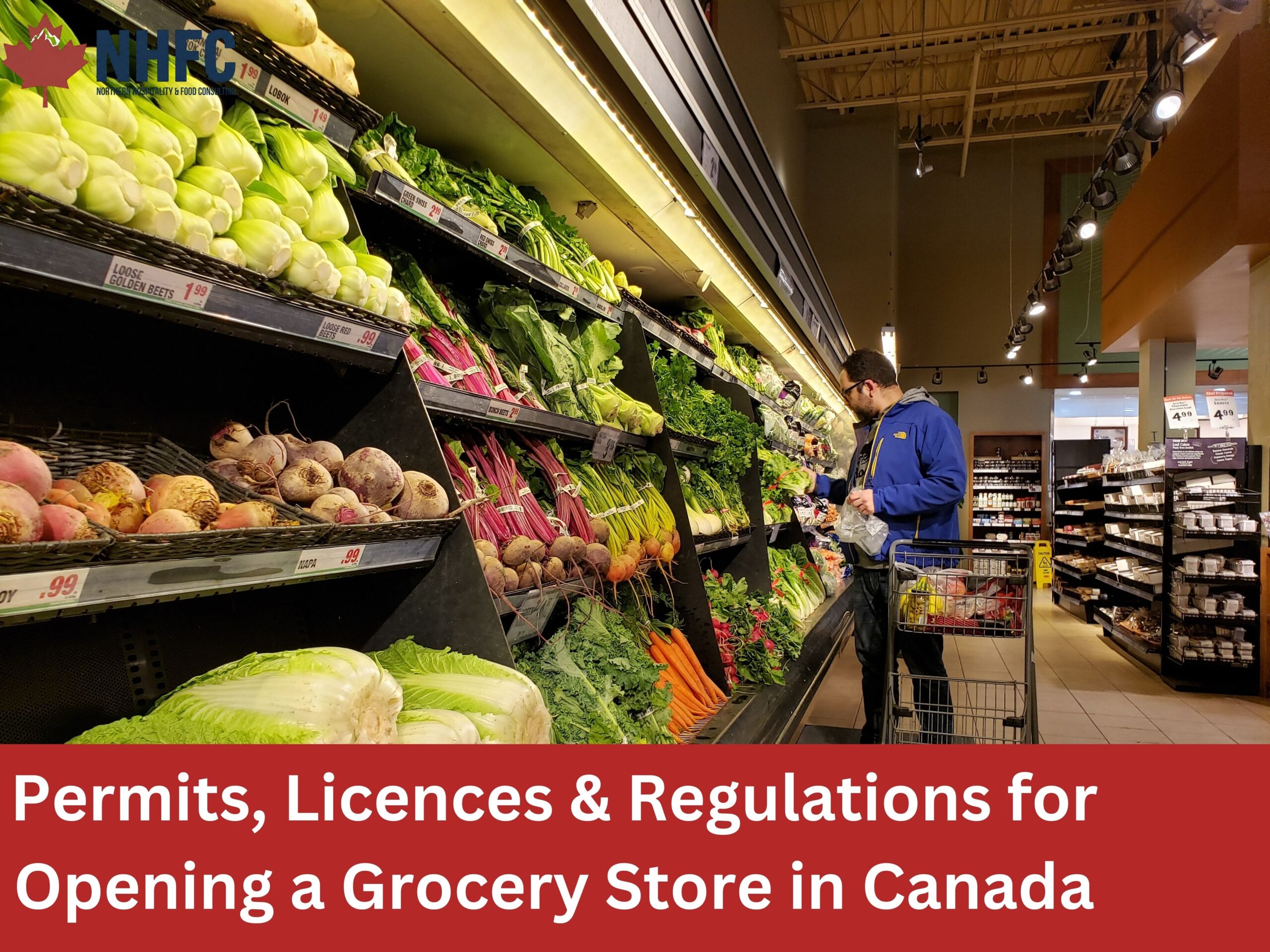
Permits, Licences & Regulations for Opening a Grocery Store in Canada
NHFC — From Idea to Opening Day (and Beyond)
Opening a grocery store in Canada requires much more than choosing shelves and refrigeration. Before you can legally sell food, you must satisfy multiple layers of regulation — municipal, provincial, and federal. Missing even one step can delay your opening by weeks or months.
This article outlines exactly what you need, when you need it, and how NHFC guides grocery owners through the process smoothly and efficiently.
1) Municipal Requirements: Zoning, Business Licensing & Renovation Permits
Your first regulatory stop is always the city or municipality where your store will operate. This is where most delays occur — especially with zoning and construction.
A) Zoning Approval
Before signing a lease, confirm the space is zoned for retail food sales.
Some spaces require:
- A zoning certificate
- A change-of-use permit
- Additional parking or loading compliance
NHFC Guidance:
We review site suitability before you commit — preventing surprises that could block your project.
B) Municipal Business Licence
Most cities require a Business Licence for any retail store, with special categories for food-related businesses.
Requirements usually include:
- Application form
- Proof of zoning compliance
- Fire inspection
- Public health approval (after build-out)
C) Building & Renovation Permits
If you plan to:
- Add sinks
- Build walk-in coolers
- Change interior walls
- Add ventilation
- Install new electrical lines
…you will need building permits.
NHFC Support:
We coordinate layouts, equipment plans, and permit drawings with architects/engineers to ensure approval on the first submission.
2) Provincial Requirements: Public Health & Food Premises Regulations
Each province has its own version of “Food Premises” regulations, enforced by regional Public Health Units.
You must comply with provincial rules regarding:
- Hand-washing stations
- Food contact surfaces
- Refrigeration & hot-holding temperatures
- Storage and sanitation
- Employee hygiene and training
- Waste, grease, and pest control
Public Health Inspections
Typically includes:
- Plan review (store layout, plumbing, sinks, equipment)
- Pre-opening inspection
- Ongoing routine inspections
NHFC Expertise:
We design grocery layouts specifically to meet food premises codes — preventing costly redesigns after inspection.
3) Federal Requirements: CFIA, Labelling & Safe Food for Canadians Regulations (SFCR)
Most grocery stores fall under light federal regulations unless they manufacture, package, or distribute food across provinces.
However, you still must comply with CFIA rules, including:
A) Food Labelling Requirements
If you sell any packaged or private-label goods:
- Nutrition facts
- Allergen declarations
- Bilingual labels
- Ingredient list
- Expiry/Best Before requirements
B) SFCR Requirements
If your store handles food that crosses provincial borders, you may need:
- Traceability systems
- Preventive control plans
- CFIA licensing
NHFC Guidance:
We help you determine whether your store needs federal licensing and ensure your labeling and product sourcing meet CFIA standards.
4) Fire Code, Safety Equipment & Emergency Requirements
You must satisfy your local Fire Department with:
- Emergency exits
- Fire extinguishers
- Suppression systems
- Electrical safety
- Alarm systems
- Proper storage of combustibles
This is required before a business licence can be approved.
NHFC Support:
We coordinate store setup and layout to meet fire code requirements before inspection day.
5) Alcohol, Tobacco, Lottery & Specialty Licences
Depending on your store’s concept, you may need specialty licences:
Alcohol Sales
Available to certain grocery formats depending on province (e.g., Ontario’s AGCO).
Requires:
- Proper display areas
- Staff training
- Age verification systems
Tobacco & Vape Retail Licences
Required in most provinces; includes strict signage requirements.
Lottery Retailer Licence
Provided by provincial lottery corporations.
NHFC Help:
We guide clients through the applications and store layout requirements for regulated products.
6) Insurance Requirements
Before a landlord, lender, or supplier approves anything, you will need:
- Commercial General Liability
- Property & Equipment Insurance
- Business Interruption Insurance
- Product Liability
- Food Spoilage Protection
NHFC Guidance:
We help owners identify the right insurance coverage to protect the business through construction, opening, and operations.
7) Waste Management, Recycling & Environmental Requirements
Municipalities often require:
- Grease management
- Organic waste disposal
- Cardboard recycling
- Pest control programs
Some provinces have mandatory recycling/return programs (e.g., bottle return).
8) What Happens If You Miss One Step?
Common consequences:
- Delayed business licence
- Failed public health inspections
- Renovation do-overs
- Lost rent during delays
- Supplier onboarding delays
- Financing release delays
NHFC Advantage:
We create a regulatory roadmap so you know exactly what is approved, what is pending, and what needs to be submitted next — keeping your opening schedule intact.
Final Takeaway
Navigating the regulatory landscape for a grocery store in Canada is complex — but it follows a predictable pattern when guided correctly.
With NHFC, you get:
- A compliance-first layout
- Proper permit sequencing
- Public health readiness
- Federal labelling + CFIA guidance
- Support with alcohol/tobacco/lottery licences
- A smooth path to your business licence
NHFC — From Idea to Opening Day (and Beyond)
When you’re ready, we help you move through the approvals with confidence.


