
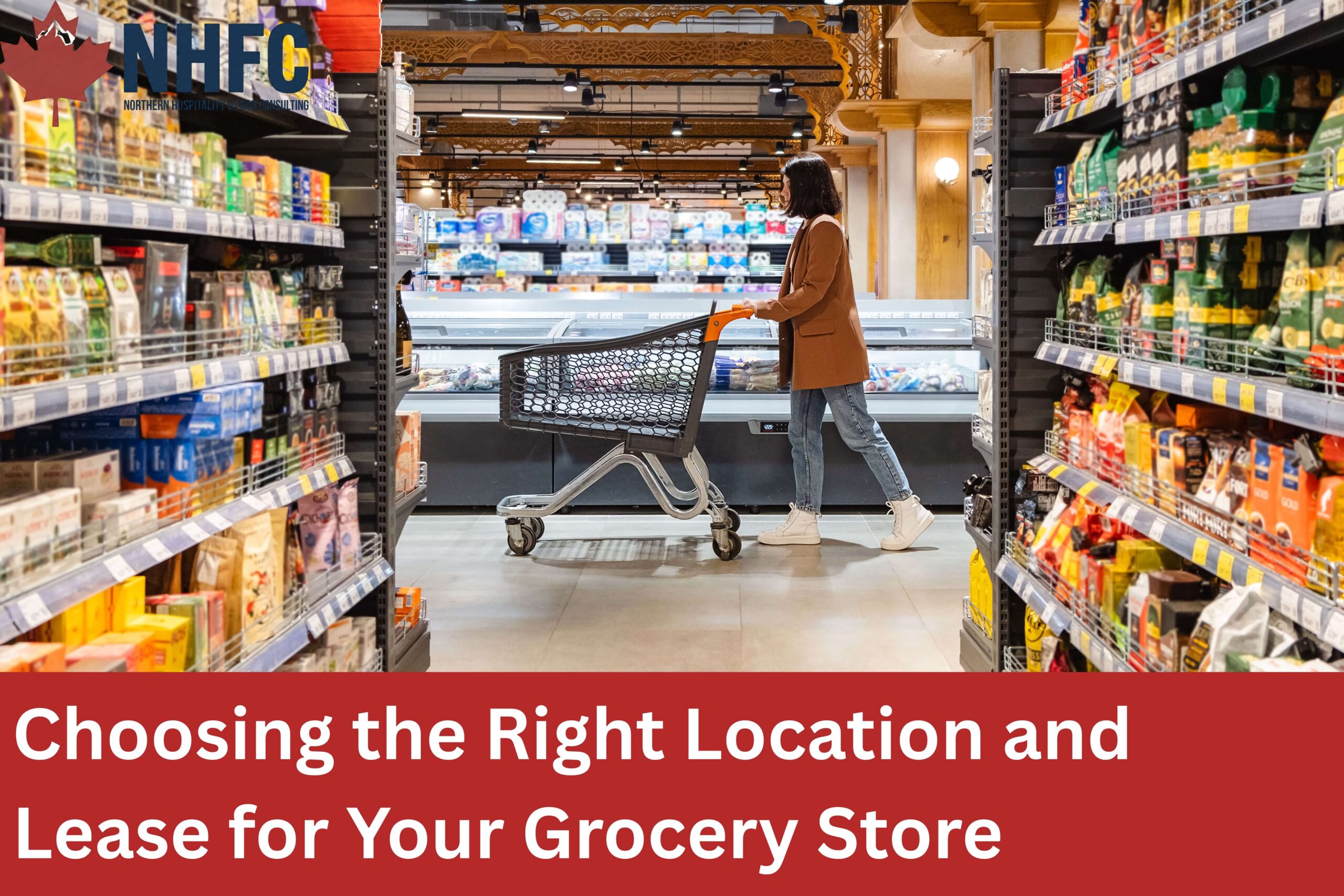
Choosing the Right Location and Lease for Your Grocery Store
NHFC — From Idea to Opening Day (and Beyond)
A grocery store lives or dies by its location. Even with perfect products, strong branding, and competitive pricing, the wrong site can limit foot traffic, raise costs, and put your business under stress from day one.
In this article, we break down exactly what to look for in a store location, how to evaluate a lease, and how NHFC helps owners make smart, long-term decisions before signing anything.
1) Understand the Customer Base in the Area
A strong grocery location matches the demographic you want to serve.
Key questions to evaluate:
- Who lives within 5–10 minutes of the site?
- Are there families, working adults, seniors, or students?
- Are there specific cultural or ethnic communities?
- What are the local income levels?
- Do people walk, drive, or rely on public transit?
A good site has dense residential areas, consistent traffic, and a customer base with daily shopping habits.
NHFC Guidance:
We help you analyze demographic data and match your grocery concept to the right neighbourhood — avoiding costly mismatches.
2) Evaluate Existing Competition
Competition is not inherently bad — but you must understand the landscape.
Assess competitors by:
- Price levels
- Store cleanliness and visual appeal
- Product availability
- Freshness, produce quality, and ethnic selection
- Customer service
- Parking and accessibility
Strong competition can mean strong demand — but poor competition may mean opportunity.
NHFC Support:
We provide competitive evaluations and help position your store to fill market gaps rather than duplicate what’s already there.
3) Traffic, Visibility & Accessibility
Customers are more likely to visit a store they can see, reach easily, and park at without frustration.
Prioritize locations with:
- Clear visibility from main roads
- Signage opportunities (facia, pylons, window signage)
- Easy entry/exit driveways
- Sufficient parking
- Nearby bus stops or pedestrian paths
If customers struggle to enter or exit your lot, they won’t return consistently.
4) Store Size & Layout Potential
Square footage must match your business model.
Consider:
- 2,000–5,000 sq.ft. → small ethnic or neighbourhood grocery
- 5,000–12,000 sq.ft. → mid-size independent market
- 12,000+ sq.ft. → full departmental supermarket
Also look at:
- Ceiling height
- Plumbing access
- Electrical capacity
- Ventilation possibilities
NHFC Expertise:
We inspect sites to ensure they can physically support coolers, freezers, walk-ins, and required back-of-house areas — preventing expensive retrofit surprises.
5) Delivery Access & Logistics Flow
Groceries require daily and weekly deliveries.
Ensure:
- Trucks can enter safely
- Clear delivery bays or rear access doors
- Space to receive pallets
- Layout space for staging, backroom storage, and walk-ins
A location with poor delivery access increases labor costs and damages product quality.
6) Lease Terms: What to Look For (and Avoid)
A lease can make or break your business. Many grocery owners overlook critical clauses that hurt them later.
Key items to review:
Rent Structure
- Base rent vs. additional rent (TMI or NNN)
- Rent escalations over the term
Lease Term Length
Groceries should avoid short terms — you need stability to build customer habits.
Exclusivity Clauses
Protect your store from another grocery opening in the same plaza.
Use Clause
Must explicitly allow:
- Retail food
- Grocery sales
- Refrigeration equipment installations
- Food prep (if applicable)
Renovation Approvals
Landlord must agree to:
- Plumbing additions
- Electrical upgrades
- Ventilation
- Walk-in cooler/freezer installation
HVAC Responsibility
Who pays if the rooftop unit dies? (Common major expense)
NHFC Guidance:
We help clients review the lease and coordinate landlord negotiations regarding build-out requirements and equipment installations.
7) Infrastructure Readiness
You must confirm that the building’s systems can handle grocery demands.
Evaluate:
- Electrical panel size (coolers require heavy load)
- Plumbing — especially for hand sinks, prep sinks, mop sinks
- Floor drainage
- Ventilation and make-up air
- Structural support for walk-ins
Upgrading infrastructure late in the project can add tens of thousands of dollars in unexpected costs.
NHFC Support:
We identify infrastructure gaps before signing — preventing blown budgets.
8) Co-Tenants & Neighbourhood Fit
Surrounding businesses impact your customer base.
Good co-tenants:
- Pharmacy
- Dollar store
- Restaurants
- Bakery
- Medical clinic
- Bank
Risky co-tenants:
- Bars/lounges with late-night disturbances
- High-turnover businesses
- Stores that bring parking congestion (car lots, furniture warehouses)
You want a mix that drives consistent, daytime foot traffic.
9) Future Growth Potential
Banks and investors want signs of long-term stability.
Evaluate:
- New construction nearby
- Planned housing developments
- Community population trends
- Competitor closures
Growth-oriented areas deliver stronger long-term sales.
10) NHFC’s Role in Location Selection
NHFC works with grocery owners at the earliest stage to ensure:
- The location fits the concept and market
- Zoning and licensing will be approved
- Infrastructure can support refrigeration and food handling
- The lease protects long-term operations
- Build-out is feasible and financially realistic
NHFC — From Idea to Opening Day (and Beyond)
We protect your investment before you spend a dollar on renovations or equipment.


