
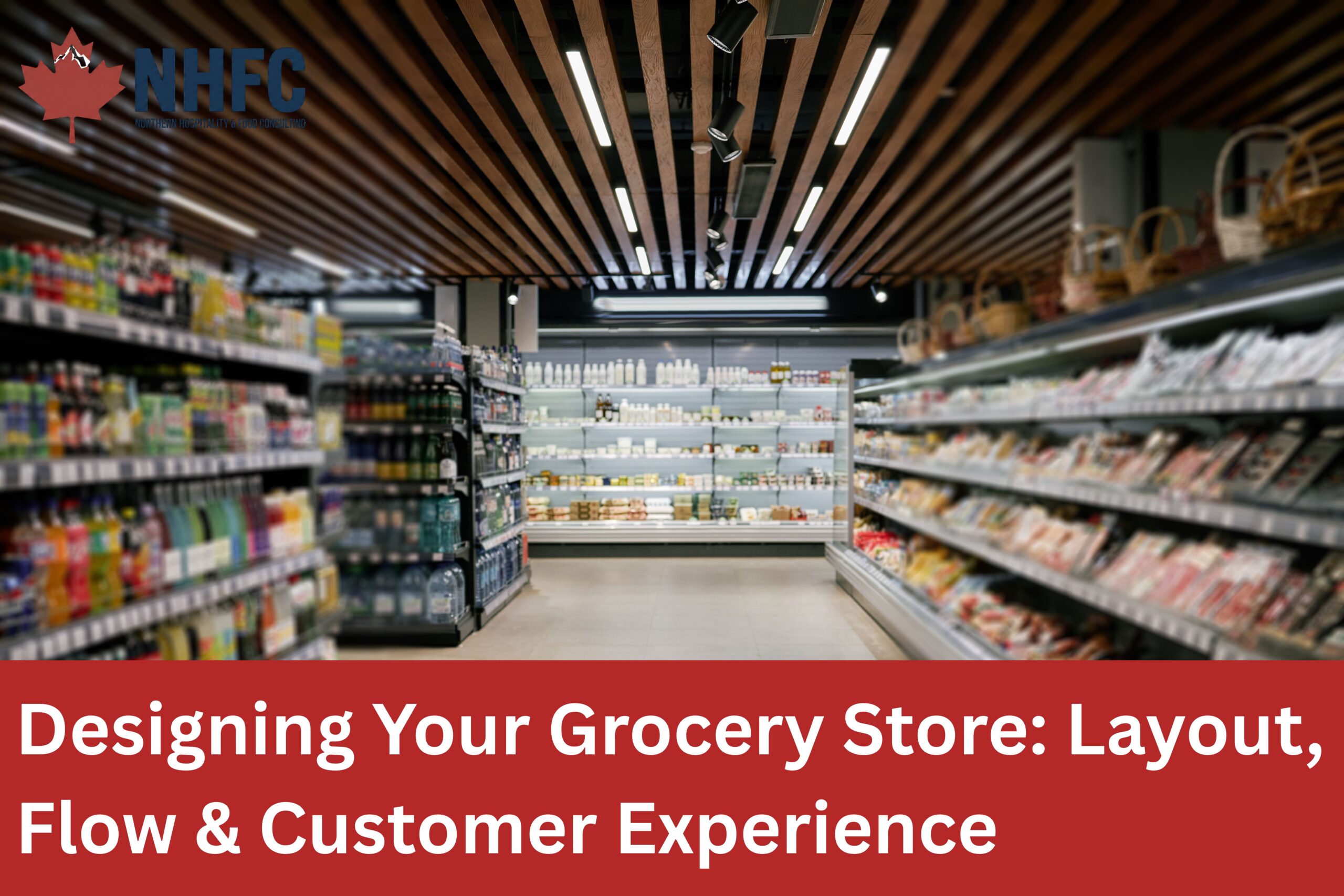
Designing Your Grocery Store: Layout, Flow & Customer Experience
NHFC — From Idea to Opening Day (and Beyond)
A well-designed grocery store is more than aisles, shelves, and coolers. It’s a controlled flow of movement, psychology, safety, and efficiency — all working together to maximize sales and minimize waste. Good design improves customer satisfaction. Great design boosts revenue.
This article outlines the essential components of an effective grocery store layout and how NHFC helps owners plan spaces that meet health codes, reduce operating costs, and deliver the experience customers expect.
1) Start With Your Store’s Customer Flow
The moment customers enter your store, they begin a predictable path.
The “Golden Path” concept:
- Customers typically turn right upon entering.
- They follow a loop around the store.
- End with impulse buys near checkout.
A strong layout works with this natural flow — not against it.
Best practices:
- Place produce up front — it gives freshness, color, and energy.
- Position high-demand items (milk, eggs, bread) deeper into the store to increase exposure to other products.
- Keep wide, clean aisles for carts and families.
NHFC Guidance:
We design traffic patterns that guide shoppers through high-margin zones without congestion.
2) Zone Your Store for Efficiency and Sales
A grocery store should be organized into clear, intentional zones.
Standard zones:
- Produce Zone — fresh, colorful, welcoming
- Meat & Poultry — refrigerated cases, strong lighting
- Dairy & Eggs — wall coolers
- Dry Goods & Canned Aisles
- Frozen Foods
- Bakery
- Prepared Foods (if applicable)
- Checkout Zone
Thoughtful zoning creates rhythm and predictability — shoppers subconsciously trust stores that feel organized.
NHFC Support:
We help you create zones that align to your store size, customer base, and equipment capacity.
3) Plan for Back-of-House Early
What customers don’t see is just as important as what they do.
Back-of-house includes:
- Walk-in coolers
- Walk-in freezer
- Storage & staging areas
- Employee room
- Utility space
- Garbage & recycling
- Prep rooms (if required)
Poor backroom planning causes:
- Delays during deliveries
- Increased labor cost
- Food spoilage
- Disorganized inventory
NHFC Expertise:
We ensure your back-of-house layout meets provincial health codes and supports efficient daily operations.
4) Refrigeration & Equipment Placement
Refrigeration is the heart of a grocery store. Placement affects:
- Energy consumption
- Shopper comfort
- Food safety
- Employee workflow
General rules:
- Avoid placing refrigerated cases near entrance doors.
- Separate hot equipment (rotisserie, ovens) from cooling equipment.
- Enable clear service paths for technicians.
- Ensure electrical capacity is grouped correctly.
NHFC Advantage:
We coordinate equipment placement in a way that minimizes power strain, improves airflow, and passes health inspections.
5) Lighting, Colors & Atmosphere
Lighting dramatically impacts how customers perceive food quality.
Use:
- Bright, warm lighting in produce zones
- Cooler lighting for dairy and meat
- Accent lighting for endcaps or promotions
- Clean, modern color palettes for walls and signage
Poor lighting makes food look old — even if it isn’t.
NHFC Guidance:
We recommend lighting schemes that improve product appeal and match your brand identity.
6) Aisle Width & Accessibility Standards
Aisles must accommodate:
- Mobility devices
- Shopping carts
- Families
- Two-way traffic
Minimum standards:
- 5–6 feet wide (small stores)
- 6–8 feet wide (larger stores)
Accessibility is not optional — it’s legally required in most provinces.
7) Checkout Area Design
The checkout zone is the last impression customers have.
Best practices:
- Keep lines open and visible
- Offer at least one express lane
- Include impulse items (but not overcrowded)
- Maintain wide passing areas
A poorly designed checkout creates frustration and drives customers away.
NHFC Support:
We design checkout layouts that improve flow, reduce backups, and follow accessibility standards.
8) Compliance Built Into the Layout
Store design must incorporate:
- Hand-washing sinks
- Mop sinks
- Proper drainage
- Ventilation routes
- Prep counter spacing
- Temperature-controlled storage
A beautiful store means nothing if health inspectors won’t approve it.
NHFC Expertise:
We design with provincial public-health compliance in mind — preventing redesigns after construction.
9) Customer Experience Enhancers
Small additions can greatly increase customer comfort and retention.
Examples:
- Clear signage in two languages
- Comfortable store temperature
- Scent control
- Clean floors and shelves
- Music that matches the community
Grocery shopping is a repetitive habit — make your store the comfortable one.
10) NHFC’s Role in Store Design
NHFC supports grocery owners with:
- Professional layouts tailored to your concept
- Health-code and CFIA compliance
- Equipment planning and electrical load mapping
- Efficient back-of-house workflows
- Customer flow optimization
- Vendor coordination
NHFC — From Idea to Opening Day (and Beyond)
Your design is the difference between a store that survives and a store that thrives.


