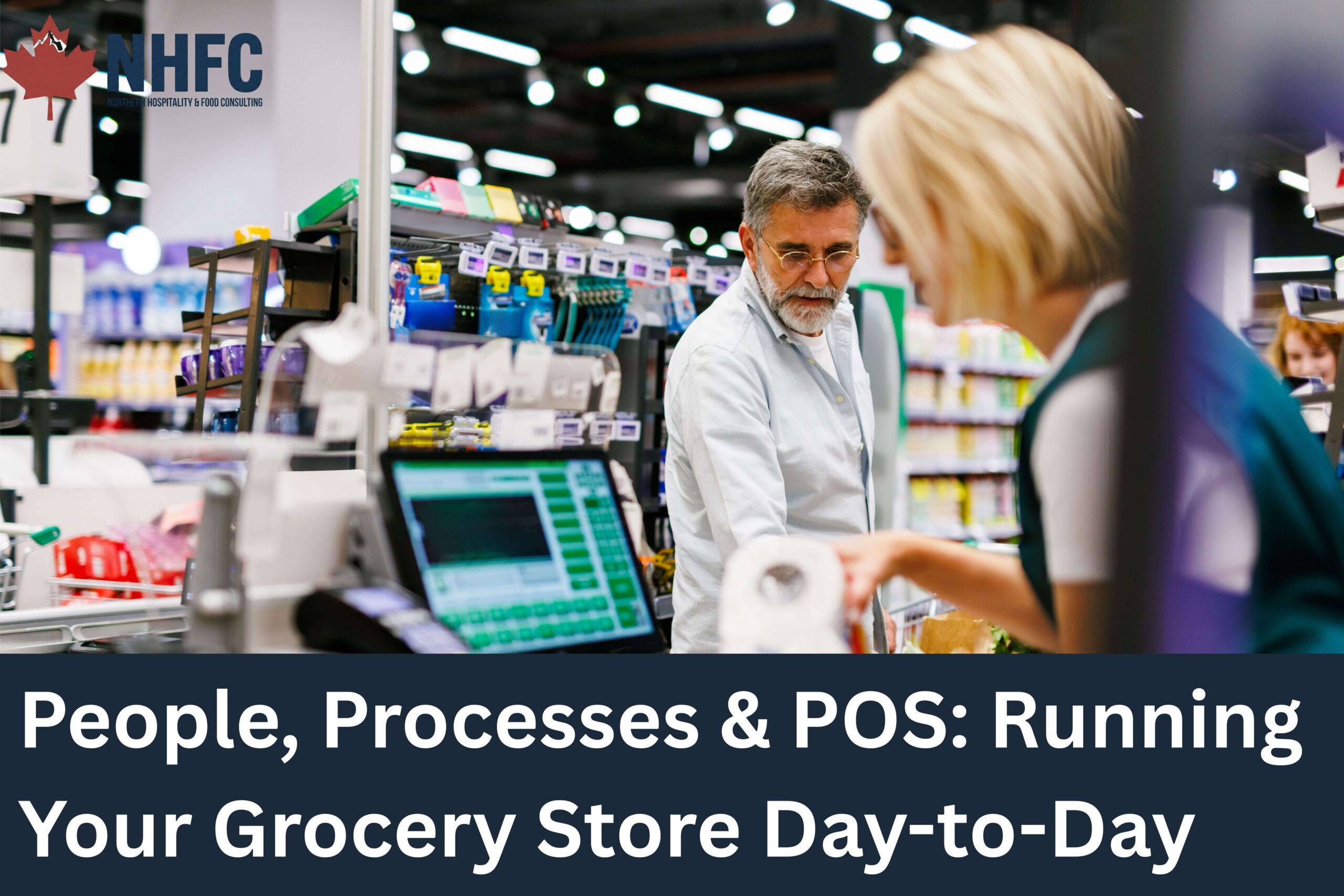
People, Processes & POS: Running Your Grocery Store Day-to-Day
NHFC — From Idea to Opening Day (and Beyond)
A grocery store may look simple from the outside, but behind the scenes it is one of the most operationally demanding businesses you can run. Hundreds of SKUs, frequent deliveries, staff rotation, temperature control, customer service, shrink management, and tight margins — all must work together every single day.
This article breaks down the essential processes, staffing structure, and POS systems required for smooth daily operations, and how NHFC helps new grocery owners set these systems up the right way from the start.
1) Build the Right Team Structure
Even a small grocery store needs a well-defined staff structure. The days of “everyone does everything” quickly lead to chaos.
Typical staffing roles:
- Store Manager – oversees operations, staff, ordering
- Front-End Supervisor – manages cashiers and customer service
- Cashiers – checkout, customer interaction, bagging
- Stock Clerks – shelf stocking, rotation, recovery
- Receiver – handles deliveries and temperature checks
- Department Leads (optional) – e.g., meat, produce, dairy
- Cleaner / Sanitation – ensures compliance with health standards
Each role must have clear responsibilities to avoid overlap and confusion.
NHFC Guidance:
We help create staffing plans and role definitions based on your store size, budget, and operating hours.
2) Staff Training: The Backbone of a Smooth Operation
Training is not optional — it is legally required and operationally essential.
Key training areas:
- Food safety certification
- Temperature control
- Hygiene and sanitation
- Customer service
- Product knowledge
- Opening and closing procedures
- Emergency procedures
- POS system usage
Well-trained staff reduce shrink, errors, and customer complaints.
NHFC Support:
We assist with training frameworks that set your team up for consistency and compliance.
3) Daily Opening Procedures
Every morning, certain tasks must be performed to ensure a safe and organized store.
Typical opening checklist:
- Unlock & secure alarm
- Turn on lights, equipment, displays
- Check refrigeration temperatures
- Fill produce displays
- Restock impulse areas
- Verify cash floats at registers
- Perform quick sanitation sweep
- Review staff schedules & priorities
Smooth openings lead to fewer issues later in the day.
4) Daily Closing Procedures
Closing is just as important as opening — it determines the next day’s readiness.
Standard closing tasks:
- Clean floors, shelves, service counters
- Return misplaced stock
- Pull expired or nearly expired products
- Conduct temperature checks
- Empty trash & recycling
- Count tills and close POS
- Lock storage, walk-ins, and office
- Final store inspection
Consistency is everything. NHFC helps build reliable checklists so nothing is overlooked.
5) Receiving & Backroom Operations
Receiving is one of the most critical parts of grocery operations.
A strong receiving process includes:
- Verifying temperature of perishable goods
- Checking product quality (produce, meat, dairy)
- Confirming quantities vs invoices
- Rejecting damaged or unsafe goods
- Using FIFO rotation
- Logging inventory into POS
- Stage items for stocking efficiently
A weak receiving process is the #1 source of shrink and customer complaints.
NHFC Expertise:
We create receiving SOPs and train your team on proper execution.
6) Inventory Management: The Heart of Profitability
You must maintain:
- Accurate counts
- Correct order quantities
- Fast rotation
- Zero expired goods on shelves
Inventory tasks include:
- Weekly or monthly cycle counts
- Department-level ordering
- Setting par levels
- Monitoring sales data
- Managing supplier relationships
Good inventory control protects margins and cash flow.
7) The POS System: Your Store’s Brain
Your POS should do more than ring up sales.
Essential POS features:
- Real-time inventory tracking
- Price changes and promotions
- Department-level sales reporting
- Staff permissions
- Loyalty programs (optional)
- Purchase order generation
- Barcode scanning reliability
Cheap POS systems often fail under grocery complexity.
NHFC Recommendation:
We help you select a POS that fits grocery-specific needs, integrates with accounting, and supports future growth.
8) Shrink Management
Shrink is the silent killer of grocery profits.
Shrink sources:
- Spoilage
- Theft
- Pricing errors
- Incorrect receiving
- Improper shelf rotation
- Staff mistakes
Tools to reduce shrink:
- Daily rotation checks
- Clear labeling
- Accurate inventory
- Staff accountability
- Camera systems
- Waste logs
NHFC Support:
We provide operational systems that cut shrink significantly for new stores.
9) Customer Experience: The Differentiator
Shoppers return because of:
- Cleanliness
- Friendly staff
- Organized shelves
- Fast checkout
- Fresh, appealing displays
Customer experience directly impacts weekly sales and loyalty.
NHFC Guidance:
We help set standards for in-store presentation and customer flow.
10) Operations Playbook: Your Store’s Rulebook
A strong grocery store runs on systems — not memory.
Your operations playbook should include:
- Opening & closing procedures
- Cleaning schedules
- Receiving SOPs
- Equipment maintenance logs
- Food safety policies
- Emergency procedures
- Staff training guides
NHFC develops customized operations manuals that align with your store’s layout, equipment, and staffing model.
Final Takeaway
Daily operations are where grocery businesses succeed or fail.
With the right staff, clear processes, and a reliable POS system, even a small independent store can outperform larger competitors.
NHFC helps owners set up these systems so their store opens strong — and stays strong.
NHFC — From Idea to Opening Day (and Beyond)


