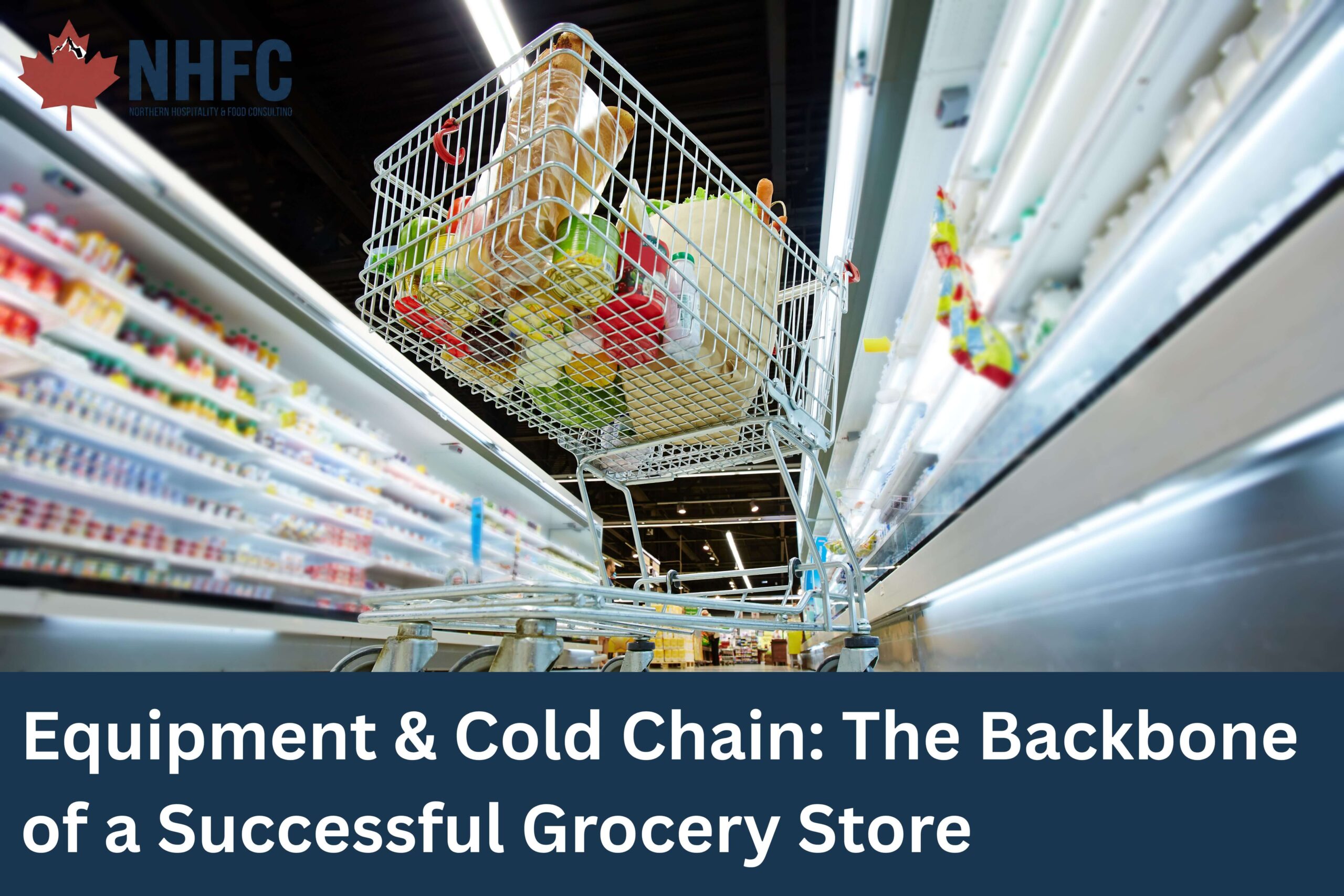
Equipment & Cold Chain: The Backbone of a Successful Grocery Store
NHFC — From Idea to Opening Day (and Beyond)
No grocery business can function without the right equipment and a reliable cold chain. These systems protect food quality, ensure safety, reduce energy costs, and keep operations running smoothly. A single failure — a broken freezer, a walk-in cooler losing temperature — can cost thousands in spoiled inventory within hours.
This article outlines the essential equipment every grocery store needs, how to size it correctly, common mistakes new owners make, and where NHFC supports owners with better decisions and smoother setups.
1) Understanding the Cold Chain
The cold chain is the temperature-controlled supply flow from delivery → storage → display → checkout.
Key cold chain elements:
- Receiving protocols (checking temperatures on arrival)
- Walk-in coolers & freezers
- Refrigerated display cases
- Backup systems / alarms
- Regular maintenance schedules
A break in the cold chain means:
- Spoiled product
- Lost inventory
- Health violations
- Loss of customer trust
NHFC Guidance:
We help owners design cold-flow systems that minimize temperature fluctuations and meet provincial health codes.
2) Walk-In Coolers & Freezers
These are the backbone of grocery operations.
What to consider:
- Size based on expected inventory volume
- Shelving layout and airflow
- Location close to receiving
- Correct insulation and flooring
- Drainage and moisture control
- Door width for pallet entry
Common mistakes:
- Walk-in too small → constant overloading, spoilage risks
- Walk-in too large → wasted energy, high operating costs
- Poor placement → delivery bottlenecks and labor inefficiency
NHFC Expertise:
We help you size and position walk-ins correctly — avoiding costly rebuilds later.
3) Refrigerated Display Cases
These cases determine how customers see and select your fresh products.
Main types:
- Open-air multi-deck cases (produce, dairy)
- Glass-door reach-ins (beverages, packaged foods)
- Meat/seafood service cases
- Deli & bakery cases
- Grab-and-go coolers
Key considerations:
- Energy efficiency
- Door type (open vs closed)
- Humidity control
- Case depth and shelf height
- Lighting (LED preferred)
NHFC Support:
We help owners choose cases that balance aesthetics, cost, and energy consumption.
4) Frozen Food Equipment
Frozen sections are high-demand revenue drivers but require precise equipment.
Requirements:
- Low-temperature reach-ins
- Freezer wells for bulk frozen items
- Durable shelving
- Easy-clean interiors
- Defrost cycle management
Poor freezer planning can double energy bills or damage product quality.
5) Back-of-House Equipment
Beyond customer-facing areas, you need equipment that supports safe and efficient operations.
Typical backroom essentials:
- Stainless steel prep tables
- Food-grade storage racks
- Industrial sinks (hand, prep, mop)
- Dishwashing systems (if food prepared on-site)
- Ice machines (optional)
- Pallet jacks and carts
- Waste management stations
- Employee lockers
NHFC Guidance:
We design backroom layouts that fit health code and ensure smooth daily operations.
6) Point-of-Sale (POS) Systems
A grocery-ready POS system must handle:
- Barcode scanning
- Inventory tracking
- Price overrides
- Promotions and flyers
- EBT/subsidy processing (province-dependent)
- End-of-day reporting
Cheap POS solutions often fail under grocery workloads.
NHFC Recommendation:
We help owners choose scalable POS systems that support real grocery needs, not basic retail needs.
7) Choosing Energy-Efficient Equipment
Energy is one of the top operating costs in grocery. An inefficient store bleeds money daily.
Look for:
- Energy Star ratings
- LED lighting
- Anti-sweat door heaters
- ECM fan motors
- Night curtains on open cases
- Floating head pressure controls
Every small improvement reduces ongoing expenses significantly.
8) Maintenance & Repair Planning
Grocery equipment will fail — the question is whether you’re prepared.
Build a maintenance plan:
- Quarterly refrigeration checks
- Yearly electrical reviews
- Cleaning of coils, condensers, fans
- Emergency contact list for after-hours failures
NHFC Network:
We connect owners with reliable service providers and help set up maintenance schedules to minimize downtime.
9) Sourcing Equipment Smartly: New vs Used
New equipment:
- Reliable warranties
- Higher efficiency
- Longer lifespan
Used equipment:
- Lower upfront cost
- Higher risk of failure
- Shorter lifespan
- Unknown maintenance history
NHFC Advantage:
We help owners source cost-effective equipment from trusted suppliers — avoiding junk units that fail early.
10) Avoiding the Most Common Equipment Mistakes
Mistake 1: Buying equipment before designing the layout
→ Leads to mismatched sizes and returns.
Mistake 2: Underestimating electrical requirements
→ Causes power failures and expensive panel upgrades.
Mistake 3: Choosing visually attractive cases over functional ones
→ Customers don’t notice — but your bill does.
Mistake 4: Installing walk-ins in impossible locations
→ Bottlenecks and compliance issues.
Mistake 5: No backup plan for failures
→ One freezer failure can cost $8,000–$20,000 in inventory.
NHFC Prevention:
We guide owners through every stage to avoid expensive equipment mistakes.
Final Takeaway
Your grocery store’s equipment and cold chain determine:
- Product quality
- Customer satisfaction
- Energy cost
- Food safety
- Operational efficiency
- Long-term profitability
With NHFC, you get a partner who understands both the technical and operational side of grocery equipment — ensuring smart decisions from day one.
NHFC — From Idea to Opening Day (and Beyond)


