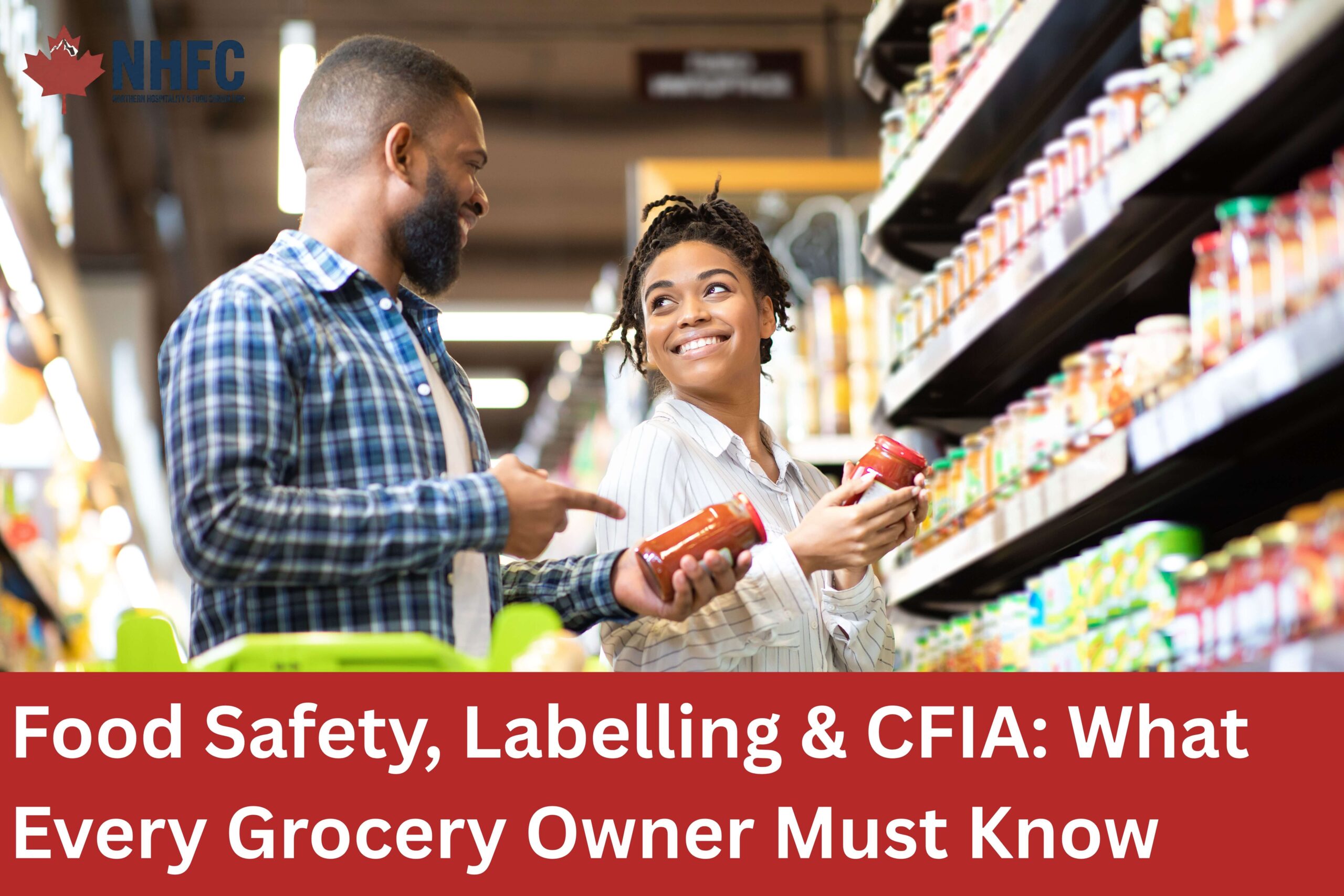
Food Safety, Labelling & CFIA: What Every Grocery Owner Must Know
NHFC — From Idea to Opening Day (and Beyond)
Food safety is the foundation of every grocery business in Canada. Customers expect fresh, safe food — and regulators demand strict compliance. Whether you sell packaged goods, fresh produce, or in-house prepared foods, your store must meet provincial public-health standards and federal CFIA requirements.
This article explains the practical rules grocery owners must follow, the most common mistakes new operators make, and how NHFC helps ensure your store passes inspections and earns customer trust from day one.
1) Understanding the Two Regulatory Layers: Provincial + Federal
Grocery stores operate under both:
- Provincial food premises regulations (public health)
- Federal CFIA rules (labelling, packaging, traceability)
Provincial = How you run your store
(sinks, sanitation, refrigeration, food handling)
Federal = What you sell
(label requirements, CFIA rules, cross-border regulations)
NHFC Guidance:
We help owners understand where their operations fall and what rules apply to their specific business model.
2) Provincial Food Premises Requirements
The province controls how food is handled, stored, and displayed.
Core requirements include:
- Handwashing sinks in accessible locations
- Prep sinks and proper dishwashing facilities
- Separate storage for chemicals and food
- Safe refrigeration temperatures
- Proper hot-holding temperatures (if applicable)
- Approved food-contact surfaces
- Rodent and pest control programs
- Employee hygiene standards
- Sanitation procedures and logs
A public health inspector will review your layout before you open and regularly afterward.
NHFC Expertise:
We design layouts that meet provincial standards and help prepare you for pre-opening inspection.
3) Cold Storage & Temperature Control Requirements
Temperature control is one of the most common reasons new stores fail inspections.
Required temperatures:
- Refrigeration: 4°C (40°F) or lower
- Freezers: –18°C (0°F) or lower
- Hot holding: 60°C (140°F) or higher
You must also:
- Log temperatures regularly
- Maintain calibrated thermometers
- Have corrective procedures for temperature deviations
NHFC Support:
We integrate cold-chain management into your layout and operations to prevent spoilage and violations.
4) Cross-Contamination Prevention
Food placement must prevent contamination between:
- Raw meats
- Ready-to-eat foods
- Produce
- Dairy
- Prepared foods
Rules include:
- Raw meats below produce in coolers
- Separate cutting and prep areas
- Color-coded tools (cutting boards, knives)
- Proper employee workflow sequences
Even if you do not prepare food on site, cross-contamination risks still apply in storage and display.
5) Cleaning, Sanitation & Hygiene Standards
Every grocery store must maintain:
- Daily cleaning schedules
- Sanitizer buckets at workstations
- Trained staff in hygiene procedures
- Approved sanitation chemicals
- Proper waste disposal systems
Health inspectors heavily review sanitation logs because they reflect your overall food-handling culture.
NHFC Guidance:
We help build cleaning protocols and training systems aligned to provincial regulations.
6) CFIA Labelling Requirements for Packaged Foods
If you sell any packaged product, private label, or repackaged goods, you must follow CFIA’s strict labelling standards.
Labels must include:
- Bilingual text
- Nutrition Facts table
- Ingredient list
- Allergen declarations
- Net quantity
- Expiry / Best Before date
- Manufacturer or retailer information
CFIA routinely inspects grocery stores for incorrect or incomplete labelling.
NHFC Expertise:
We advise owners on compliant labelling and review private-label packaging for CFIA consistency.
7) Safe Food for Canadians Regulations (SFCR) — Do They Apply to You?
Most small grocers do not need an SFCR licence unless they:
- Import food
- Export food
- Manufacture packaged goods
- Distribute food to other provinces
- Supply restaurant chains or distributors
If SFCR applies, you must have:
- A Preventive Control Plan (PCP)
- Traceability systems
- Recall procedures
NHFC Support:
We help determine whether your store needs an SFCR licence and assist with compliance if required.
8) Traceability & Recall Preparedness
Even small grocers must:
- Know where food came from
- Track lot codes
- Maintain supplier records
- Be able to remove recalled items quickly
A recall event is one of the biggest legal and reputational risks in food retail.
NHFC Advantage:
We help you set up simple, effective traceability documentation so your store is inspection-ready at all times.
9) Employee Training Requirements
Food safety training is mandatory.
Most provinces require at least one certified food handler on duty at all times.
Training covers:
- Safe handling
- Temperature control
- Hygiene
- Cleaning procedures
- Cross-contamination prevention
NHFC Guidance:
We help owners create training plans and onboarding workflows that reduce staff mistakes and simplify operations.
10) Most Common Food Safety Mistakes New Grocers Make
- Improper cooler placement leading to temperature failure
- Insufficient handwashing sinks
- Incorrect food storage ordering
- Repackaging food without compliant labelling
- Poor sanitation procedures
- Unsafe thawing practices
- No temperature logs
These are also the most common reasons for failing routine inspections.
NHFC Prevention:
We help owners avoid these errors through proper design, training, and operational planning.
Final Takeaway
Food safety is non-negotiable.
Compliance protects your customers, your reputation, and your financial investment.
With NHFC, grocery owners gain:
- A compliant layout
- Proper cold-chain systems
- CFIA and provincial regulatory guidance
- Employee training frameworks
- Clear sanitation and recordkeeping procedures
NHFC — From Idea to Opening Day (and Beyond)
Your store will open clean, compliant, and ready to earn customer trust.


